
Polls opened at 7 am local time and would close at 5 pm with some 12,845 polling stations being set up throughout the country for 15.9 million voters, who will choose a successor to President Maithripala Sirisina.

Sri Lanka's Acting President Ranil Wickremesinghe on Monday imposed emergency giving him sweeping powers ahead of the key election on July 20 to pick a new President as he urged the political parties to put aside differences and form an all-party government, with the Opposition dubbing his decision as an 'undemocratic draconian act'.

India welcomed resolution of the political crisis in Sri Lanka and exuded confidence that relations between the two countries will continue to move on in an upward trajectory.

President Gotabaya Rajapaksa on Monday fired Basil Rajapaksa from his post and invited the Opposition parties to join a unity Cabinet to tackle the raging public anger against the hardships caused by the economic crisis.

The SJB has begun to collect signatures from MPs for the no-confidence motion, according to media reports.

The government's poor handling of the economic crisis where people currently endure long hours of power outages and scarcity of essentials has angered the public which planned country-wide protests on Sunday.

Whatever its apprehensions and concerns about the regime of the Rajapaksa clan, India must be ready with unconditional assistance when Colombo asks for it. Because it will, observes Aditi Phadnis.

Sri Lanka declared a state of emergency on Wednesday as angry protesters stormed the prime minister's office in Colombo, hours after president Gotabaya Rajapksa fled to the Maldives on a military jet, amid the country's worst economic crisis in decades.
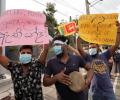
Ppolitical experts in Colombo said the ministers came under intense pressure from the public over the government's alleged "mishandling" of the economic crisis, triggered by the shortage in the foreign exchange reserve.

Reacting to the apex court's ruling, sacked Prime Minister Wickremesinghe said, "We trust that the President will promptly respect the judgment of the courts.

The 74-year-old leader, who describe himself as "a rebel with a cause", earlier served as the country's president from 2005-2015, becoming South Asia's longest-serving leader. He was also prime minister for a brief period in 2018.

The SLPP, led by prime minister Mahinda Rajapaksa, has won in 145 constituencies, bagging a total of 150 seats with its allies, a two-thirds majority in the 225-member Parliament, according to the results announced by the election commission.
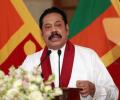
The parliament has approved a no-trust vote against Prime Minister Rajapaksa, speaker of parliament Karu Jayasuriya announced in the House.

Unofficial results indicate that the SLPP would comfortably win at least 17 out of the 22 districts on offer.

Rulers in New Delhi and their political aides in sensitive states like Tamil Nadu have to be doubly careful not to provoke a situation whose consequences may be much more than visible now to the naked eye, notes N Sathiya Moorthy.

'Sirisena will keep both Rajapaksa and Wickremesinghe on tenterhooks till the next general election due in 2020,' says Aditi Phadnis.
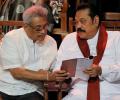
Gota has to decide if he could order elder brother Mahinda's arrest as the agent provocateur of Monday's violence. Then he has to prepare for an interim government, in which no one would now want to become a cabinet minister leave alone prime minister, explains N Sathiya Moorthy.
